Canada regulates the minimum safety equipment carried in small vessels, including canoes and kayaks. This guide outlines those requirements in plain terms and explains why cold water shapes nearly every paddling decision in this country.
Updated June 13, 2026 · Reading time about 6 minutes
Read the rules directly
Requirements depend on vessel length and type and can change. Treat this page as an orientation, then confirm the current list in Transport Canada's Safe Boating Guide before you rely on it.
Required equipment
For human-powered craft such as canoes and kayaks, Canadian small-vessel rules centre on a small set of items. The Safe Boating Guide describes the equipment categories that apply to most paddlers:
An approved personal flotation device (PFD) or lifejacket of the correct size for every person on board.
A buoyant heaving line of sufficient length for throwing to someone in the water.
A manual propelling device (a spare paddle) or an anchor with line, depending on the craft.
A bailer or manual bilge pump for removing water.
A sound-signalling device, such as a pealess whistle.
Navigation lights or a watertight flashlight when operating after dark or in reduced visibility.
Exact obligations vary with the length of the vessel, so the official guide is the authority.
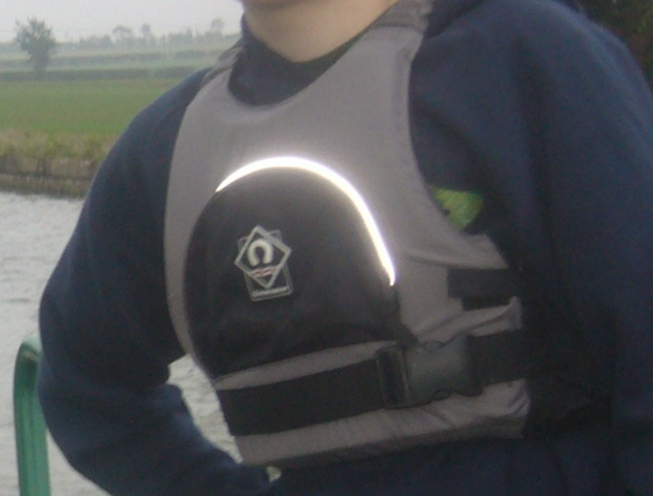
A paddling buoyancy aid. A device only works if it is worn and correctly fitted. Photo: Wikimedia Commons.
Choosing and fitting a PFD
A flotation device is the single most important item, and it only helps if it is on your body. Carrying it loose in the boat is both unsafe and, for the required device, not compliant.
Right size
Choose a device sized to your chest measurement and weight range. Paddling-specific cuts have larger armholes so the shoulders move freely.
Snug fit
Fasten all buckles and tighten the side straps. A correctly fitted device cannot be pulled up over your chin when a partner tugs the shoulders.
Approved
Use a device approved for use in Canada and keep it free of rips, mildew, and crushed flotation.
Cold water and dressing
Canadian lakes and rivers stay cold long after the air warms up, and snowmelt-fed rivers can be frigid through early summer. Sudden immersion in cold water triggers an involuntary gasp and rapid loss of muscle control, which is why experienced paddlers dress for the water temperature rather than the day's sunshine.
Depending on conditions, that can mean a wetsuit or drysuit, insulating layers that still work when wet, and avoiding cotton. When unsure, the conservative choice is to assume immersion is possible.
Plan and communicate
Leave a trip plan with someone reliable: where you launch, your route, and when you expect to return. It costs nothing and shortens any search if plans change.
Sensible extras
A basic first-aid kit kept dry.
A charged phone or communication device in a waterproof case.
Sun protection — reflected glare off water is intense.
Drinking water and a simple repair item such as waterproof tape.
Verify before you launch
Run a short check at the put-in: flotation device on and fastened, whistle attached, bailer and heaving line aboard, and the forecast reviewed. For lessons in self-rescue and cold-water response, lifesaving and paddling organisations across Canada run certified courses.